Prediction markets are heading into the biggest night in their short history with fewer places to advertise than at any point this year. In this expert comment, Peter Sengenberger, Managing Partner of Global TV Experts USA, sets out why the 3 November US mid-terms arrive just as the operators' advertising options are closing.
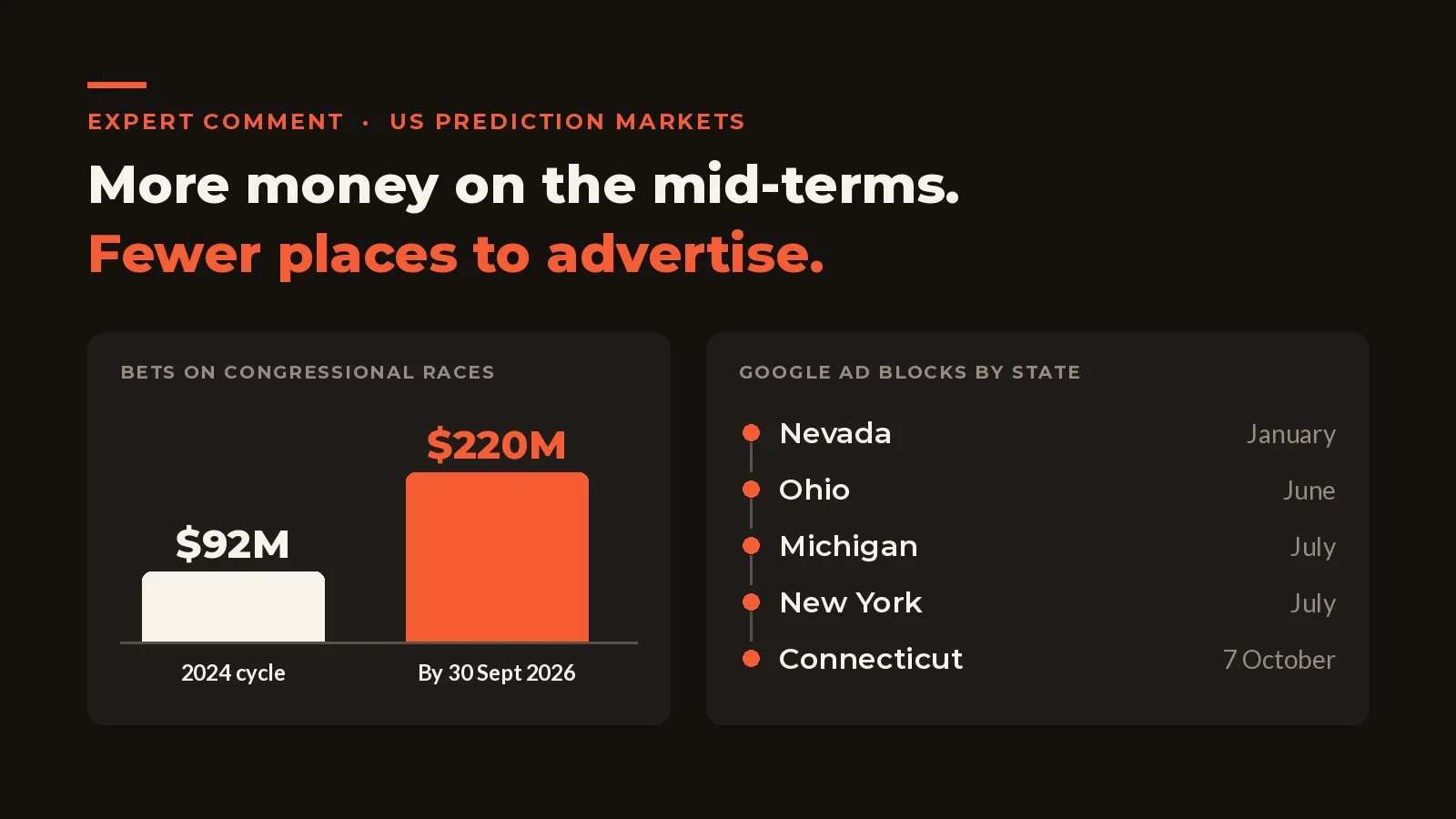
- More than $220 million had been bet on congressional races by 30 September, more than double the $92 million bet across the whole 2024 congressional cycle.
- Google now blocks prediction market ads in five states: Nevada, Ohio, Michigan, New York and Connecticut.
- Connecticut's action against platforms and its subpoenas to 15 media organisations put TV advertising at risk too.
- The author predicts at least three more Google state blocks before the 2027 NFL season, and argues that brand strength will decide who keeps growing.
The biggest night, the narrowest channels
On November 3rd, prediction markets are set for the biggest night in their short history. Traders had already bet more than $220 million on congressional races by September 30, more than double the $92 million bet across the entire 2024 congressional cycle. One watchdog projects up to $1.6 billion before this cycle ends.
At the same time, the places these operators can advertise are shrinking.
Five states in four months
Google now blocks prediction market ads in five states:
| State | Blocked since |
|---|---|
| Nevada | January, when the policy launched |
| Ohio | June |
| Michigan | July |
| New York | July |
| Connecticut | 7 October |
Every one of those states has fought the operators in court or ordered them out. The Commodity Futures Trading Commission (CFTC) approval got these operators into the auction, but it hasn't kept them there.
Google can switch off a state with a policy update, and it's done it five times in just four months, which means that a growth strategy that depends on one platform's legal comfort can go dark in a state overnight.
Regulatory standing has now become a sharp competitive marketing advantage, and it compounds each time another state acts.
TV carries the same risk
In September, Connecticut ordered nine prediction market platforms to stop offering sports contracts and subpoenaed 15 media organizations, including ESPN, NBC Connecticut and WFSB.
None of the outlets are under investigation. But once a station's legal team has seen a subpoena, the next prediction market insertion order gets a much slower review.
Michigan has now asked a judge to hold Kalshi in contempt over ads that kept reaching its residents. The CFTC is reviewing "mention markets," and Kalshi has since pulled its sports versions.
The prediction
My prediction: before the 2027 NFL season kicks off, Google will block prediction market ads in at least three more states, closing off yet another revenue geography.
The operators still growing in 2027 will have built a brand people search for by name, one strong enough to survive losing a channel.
- 🇺🇸United States
- Licence Regulatory